
Most clinicians don’t think about thread design until something goes wrong. The drill drifts. The bone is softer than the CBCT suggested. The angulation isn’t quite where the prosthetic team needs it. In those moments, the system you’re using either gives you options — or it doesn’t.
Double Threaded Hybrid Technology, or DTHT, is the engineering principle behind the Nexplant fixture’s ability to give you those options chairside. Here’s how it works and why it matters.
What DTHT actually is
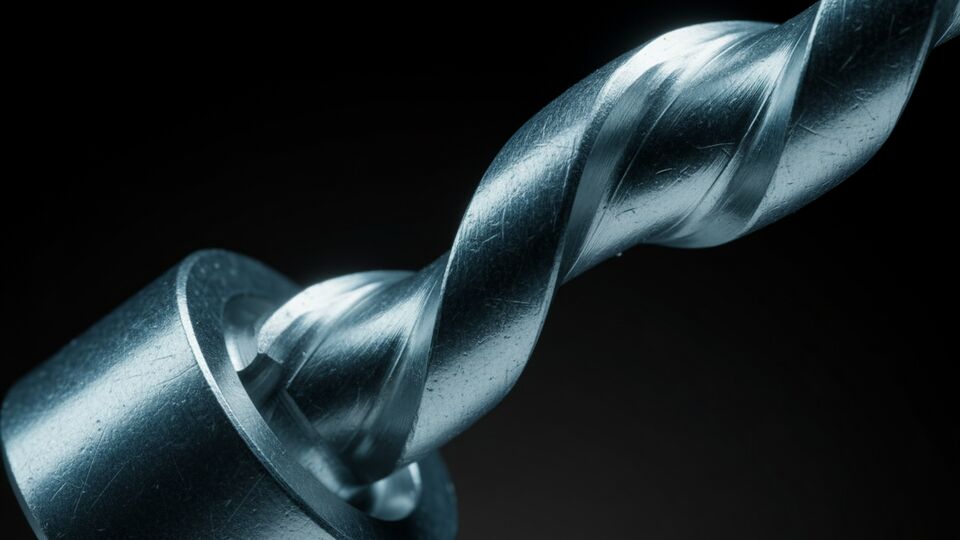
DTHT combines two thread profiles on a single implant body:
- A coarse, deep upper thread — designed for cortical bone engagement, primary stability, and the kind of bite that lets you correct path after the pilot.
- A finer, denser apical thread — designed for cancellous bone, predictable insertion torque, and consistent osseointegration along the full body of the fixture.
The handoff between the two thread regions is engineered, not arbitrary. The transition zone is calibrated so that as the implant advances, you maintain consistent insertion torque without spikes or drops. That matters in two practical ways:
1. Path correction without sacrificing stability
If your pilot drilled slightly off-axis — or if you intentionally want to walk the angulation to favor a screw-retained restoration — the upper thread profile lets you correct as you place. Because the cortical engagement is robust, the implant doesn’t lose primary stability when you adjust path. You’re not choosing between the position you want and the stability you need.
This is the single most-cited reason high-volume clinicians give for switching to Nexplant. It’s a feature you don’t appreciate until the case in front of you needs it — and then you appreciate it every time.
2. Predictable behavior across bone types
D1 and D2 bone behave very differently from D3 and D4. Most implants are optimized for one regime; in the other, you either over-torque (crestal bone loss risk) or under-torque (immediate-load contraindication).
DTHT’s dual-profile geometry behaves more consistently across the bone-density spectrum. Cortical bone gets the deep coarse thread; cancellous bone gets the finer apical thread. The result: more cases where you can confidently immediate-load, fewer cases where you have to second-guess your protocol mid-surgery.
The full-arch case
For full-arch and All-on-X clinicians, this matters even more. You’re placing four to six implants in a single visit, often in compromised bone, often with the goal of immediate provisionalization. You need every fixture to land in a torque range that supports immediate-load — and you need them to land where the prosthetic team can work with them.
DTHT was engineered with that case in mind. The combination of path-modification flexibility and consistent insertion torque is exactly what a full-arch surgeon wants from a fixture.
How it sits in the larger Nexplant system
DTHT is one of six engineering principles in the Nexplant system — alongside the tapered body, the S.L.A. surface, two prosthetic-connection options, three diameter series, and a surgical workflow designed for difficult anatomy. None of these features is novel in isolation; what’s different about Nexplant is that they’re engineered as a coherent system, not a list of marketing bullet points.
The full system specs are in our product catalog. If you’d rather talk through it with someone who’s placed thousands of these, contact our sales team.